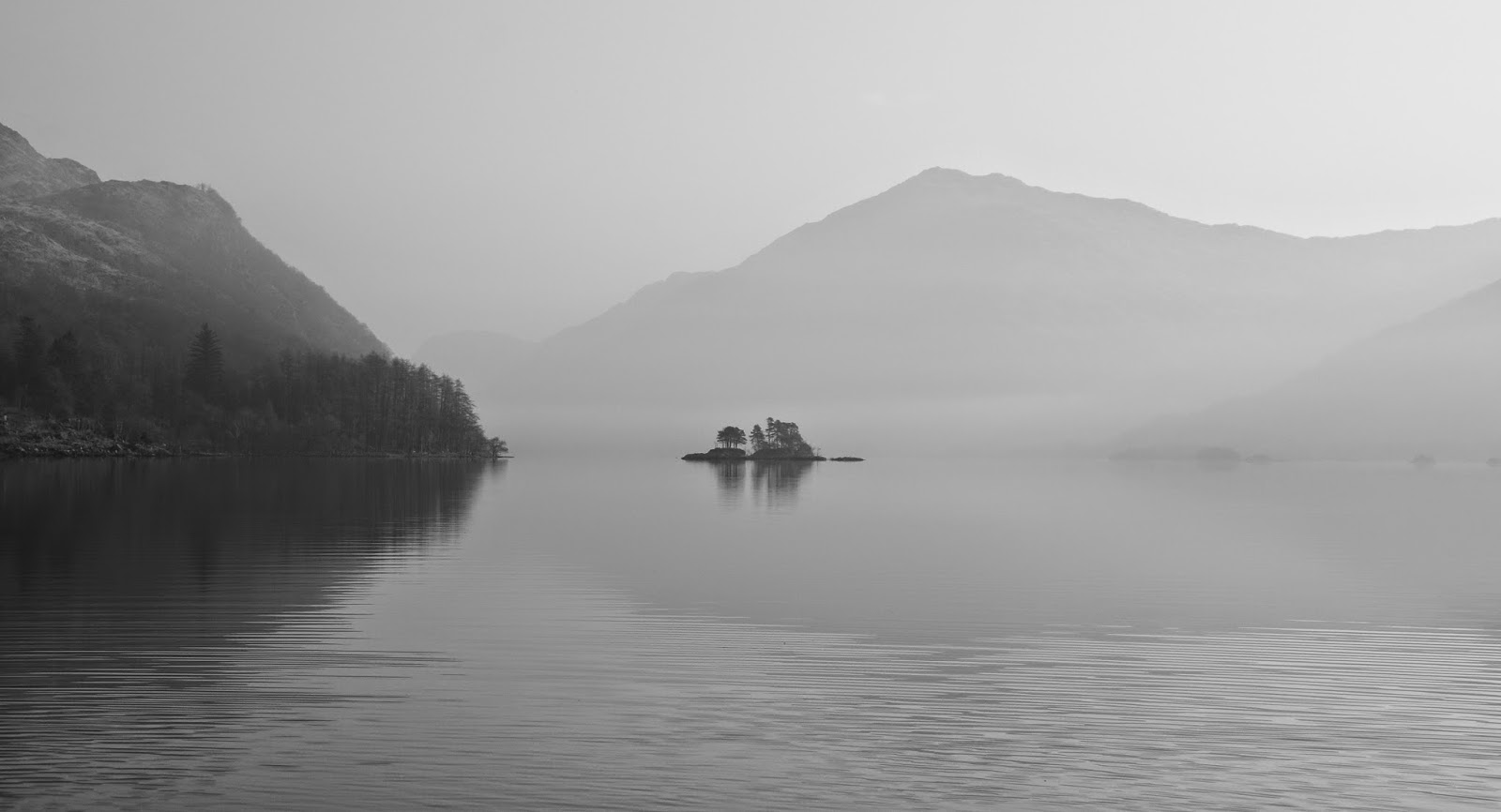
Showing posts with label Sunart. Show all posts

Monday, 7 September 2015

Sailing and not sailing on Loch Sunart

A forecast with enough of a break in a run of poor weather set me looking at options for an overnight sea kayak journey. One of the places I had in mind was outer Loch Sunart and Loch Teacuis; on my previous visit to this area I'd paddled through but not really explored to any degree.

 I launched at Salen, which has a commercial yacht jetty, though sea kayaks can launch from the shingle slipway without charge. I managed to negotiate a place to park nearby, and offered a small donation to do so - parking has long been a significant issue right along the shore of Loch Sunart and suitable places are few.


Once on the water I crossed to the southern side of Loch Sunart near the dog-leg angle around Gearr Creag.  The weather was pretty much as forecast, a northerly breeze which would increase during the afternoon, initially cloudy but brightening up.  In this image Salen can just be seen above the bow of the boat.


A little further south west is the former settlement of Camas Salach (which seems to mean "foul bay" in Gaelic, perhaps referring to the rocky seabed).  Although there are now just two small holiday cottages here, there has been a settlement on this spot since at least 1560; remains of eleven buildings and a section of field wall have been identified in archaeological surveys, with a collection of charcoal burning platforms on the hillside above.  The tall cairn on the shore includes granite plaques with family names, perhaps of the current owners and their family.


As I continued south west along the shoreline a rather unusual jetty came into view.  Incorporated into and forming most of the structure is an old barge.


Which, it's safe to say, will not be sailing again anytime soon!  The barge was placed as a temporary jetty to facilitate the loading of timber extracted from the Glencripesdale estate, which is a long way from even a minor road.

In recent years the owner of the estate, a Mr Hugh Whittle, has been involved in a long-running planning application to build a large and very grand estate owner's house and an almost as grand "estate worker's dwelling" on the estate.  Initially refused, the second planning application was successful subject to a number of conditions - such as not subsequently subdividing the estate (to safeguard against their subsequent sale on a "parcel" of land), both buildings had to be occupied only by the persons referred to in the planning application (to prevent their use as sporting lodges/hotels) and a new jetty was to be built, removing the current temporary one - this condition was because all building materials were to be taken in by sea as a further condition of the planning consent.  Mr Whittle had claimed in the press to be the only estate owner in Scotland not to have a house on his estate.... however, he also owns Glenfeochan estate which has a pretty nice bijou home sited on it as well as a rental "cottage" sleeping eight - perhaps an indication of Mr Whittle's real intention for Glencripesdale.


As the barge remains in place, filled with rocks and with a road surface (and trees) on top, it would appear that this condition hasn't yet been met.  It would be quite a considerable task to remove this "temporary structure"!


The northerly breeze was picking up as I left Glencripesdale, so I hoisted sail and fairly birled along past the fish farm at Camas Glas (green bay) where the freighter "Harvest Caroline II" was unloading part of her cargo of fish food to the service spar module.  If you drive on highland roads, you may well have noticed Ferguson's timber lorries, part of a very successful independent business based in Spean Bridge dealing mainly in timber and aquaculture haulage.  Perhaps less well known is that the company is a maritime business too, with its own fleet of ships as well as port services.


As "Harvest Caroline II" completed her cargo discharge and prepared to sail (you can check out her current voyage here) I continued my own sailing, turning into the narrow Caol Charna.........


.....with a last look back up Loch Sunart to cloud-capped Ben Resipole.


I had now left the open water of the loch and was approaching the real interest of this trip, the narrow waters around Carna, Oronsay and Loch Teacuis.  On almost the only flat ground on the island of Cara lie a couple of neat traditional houses now used as holiday cottages, but on a much less intrusive and very different model to that envisaged at Glencripesdale!

Sunday, 12 April 2015

An echo down the centuries from Eilean Fhianain


We took a last look back up Loch Shiel before we turned the corner at Camas Drollaman.  From this point the mountains which hem in the upper loch so closely and give it a fjord character begin to fall back and gradually there is a more open character to the scenery.  To have experienced the loch in such still conditions for two days was a rare treat and we wondered whether we could ever match these two days on future visits to Loch Shiel.


On the low grassy ground near the very point of Camas Drollaman we came across this Ringed Plover (Charadrius hiaticula).  A member of the Plover family and related to Lapwings, these dapper little waders are beginning to breed on more inland sites in addition to their more usual sites on sand and shingle seashore.

The UK breeding population of Ringed Plovers may be less than 6000 pairs, though numbers are boosted in the winter to about six times this figure with birds from Greenland and Canada.  I'm taking a guess that this this particular bird is a resident as it was in breeding plumage; the easiest way to tell the difference is that the bill turns from black in winter to bright yellow-orange with a black tip.

Ringed Plovers lay their beautifully marked eggs in a shallow scrape in sand or gravel.  If the nest site is approached by a predator (or a sea kayaker), the adult will try to lure away the threat by feigning a broken wing. If encountering this display, it's wise to keep a very close watch on where you put your feet as the eggs are so well camouflaged.  Seeing this display in Spring and early Summer on a beach at you intend to camp should be a cue to move on somewhere else to avoid disturbing the birds.  Mike, Douglas and I had last seen nesting Ringed Plovers on Arran in the previous summer and on that occasion had stayed well below the tideline during our second breakfast in order to avoid disturbance.


After paddling around Eilean Camas Drollaman, a wooded island which has evidence of a "bloomery" once used to smelt iron, we headed for the narrow twist of the loch containing Eilean Fhianain (Finan's Island).  We landed next to the small stone jetty, which wasn't the easiest landing due to the water deepening quite quickly immediately off the shore.

Finan was an early Celtic saint who is believed to have lived from around 520 to 600AD.  Details of his life are sketchy but he seems to have followed Columba from Ireland and became Abbot of a small monastery on the island now named after him, but which is also known as the Green Island.  He is believed to have evangelised much of Argyllshire, but considering that his name crops up all over Scotland - as well as the obvious Glenfinnan and Kilfinnan, there is a St Finzean's Fair in Perth and a Finzean as far away as Aberdeenshire, he must have travelled extensively

Known as "Finan the Leper" from the disease which afflicted him, he appears to have favoured small islands on lochs; he is also recorded as the founder of at Inisfallen on Lough Leane in Ireland's County Kerry.  Finan died, it is thought, at Clonmore in his native Ireland.


I've often thought that the early Celtic churchmen knew a good spot when they saw one, and the island which Finan chose as his base is certainly that.  A grassy green hump formed of glacial sand and till, it sits away from the shadow of the high hills and has great a view up Loch Shiel and down to the sea at Moidart.  Crucially for the purposes of the early church it sat in a prominent position on the sea and land routes through Argyll, Sunart and Moidart.

The first of the daffodils were opening on the sunny slopes as we climbed up to explore Finan's island, a splash of bright yellow against the late winter colours elsewhere.


The top of the island is largely given over to a burial ground; some of the graveslabs here are very old, probably early mediaeval, but though some of this group of crosses appear very old they date from the 18th century.  The island was a traditional burial place for the chiefs of Moidart, indeed it may have already been in use as a burial place when Finan arrived in the 6th century.  The island is still used as a place to commemorate the dead, we saw several recent stones marking the interment of ashes - a continuity of use which would surely please Finan the Leper.


A very fine Celtic cross monument stands in a prominent spot overlooking lower Loch Shiel, commemorating  a Reverend Charles MacDonald, priest of the diocese of Argyll and the Isles who also wrote a history of Moidart and of Clanranald.


The stonework on the monument is very fine indeed with celtic motifs, designs and a range of tail-casing animals.

The ruins of a stone chapel sit in a small hollow high on the island, dating from about the 16th century.  It was the centre of worship for those of the Catholic faith but fell into disuse in the 1700's, possibly in the bloody aftermath of the 1745 rebellion.  The visible ruins themselves replaced a wooden chapel which was probably built by Allan MacRuari, a chieftain of Clanranald who had a distinctly violent reputation.

But predating even this is a remarkable artifact - and one which you might reasonably expect to find in a glass case in a musem rather than exposed to the elements in this place.


On the roughly formed altar slab, sitting next to a weathered stone cross is a bronze bell which dates from the 10th century.  It takes a moment for the significance of the thing to sink in - a seamless bronze hand-bell which is in excess of 1000 years old on a small island in Loch Shiel.....

It has survived the ravages of time, of the vikings and all the tumult of the years since to remain intact on the altar here, secured with a small chain.  There are of course stories telling of the curse which will befall any person removing the bell which must have been persuasive enough for the authorities to leave it in place.

We can vouch for the fact that the bell is fully functional, an experimental ring brought a clear tone which echoed back in the still morning air and caused deer over a kilometre away on the mainland to raise their heads - it's an echo which has been heard here down ten centuries.


Eilean Fhianain is a real gem of a place and very well worth a visit.  We spent an hour or so exploring the island and its history before returning to the jetty to make coffee prior to setting out again on our route to the sea.   To have simply paddled past, intent on racking up distance would have been a great shame, one of the advantages of paddling with like-minded friends is that small explorations such as this are a real highlight of the journey as a whole.

From Eilean Fhianain we would paddle the shallow lower part of Loch Shiel and we now started to think ahead to our transition from fresh to salt water.

Monday, 23 February 2015

Scottish Pine Martens - a film by Simon Willis

 I mentioned in a previous post that our friends Simon and Liz have a Pine Marten visiting their garden near Loch Sunart in Ardnamurchan.  Simon has made a really lovely short film of these beautiful and engaging animals, shot mainly on DSLR and of superb quality.  You can  either watch it here:


or at Simon's site at SimonWillis.net: Scottish Pine Martens


 As Simon points out during the commentary, you wouldn't want a Pine Marten family to gain access to your loft or outbuilding as they can cause quite a bit of damage - but seriously, who wouldn't want to have a garden visitor like this?  :o) 

Friday, 13 February 2015

In the bleak midwinter - hearts of oak


After lunch we set off back along the shores of Loch Sunart towards Strontian.  The shoreline is generally rocky and wooded to almost the tide-line with a mix of mainly oak and birch with some holly, rowan and hazel.

The oakwoods here are of international importance as they are one of the largest surviving areas of Atlantic Maritime oak woodland - Scotland's very own rainforest.  The oaks are not the huge English oaks, but Sessile oaks (Quercus petraea) which grow smaller and can tolerate high rainfall.  Rainfall is what really makes these woods so special, the very wet climate favours luxuriant carpets of "lower plants"- mosses, liverworts and lichens - covering boulders and fallen branches in a green profusion.  Clearings within the wood are home to flowering plants and moor grass which in turn provide food for butterflies; the Ariundle woods are among the few sites where Chequered Skipper and Pearl Bordered Fritillaries can be found in Scotland, both species requiring the specialised conditions and food plants found in an Atlantic Oak wood.

Of course an oak wood is one of the most productive of forests.  In Spring and Summer the wood bursts into life and is full of the hum of insects and with birdsong.  This area is also a stronghold for scarce mammals such as Wildcat and Pine Marten; in fact Simon and Liz have a Pine Marten regularly visiting their garden.

It's perhaps in Spring and Autumn when these woods are at their most vibrant and full of colour and life, but winter is by no means a "dead" time in a wood.  These most special, most Scottish woods - the Atlantic rainforests- are a delight all year and it's intruiging to think that at one time most of the western sea-lochs would have been wooded just like this.


Precipitation is what sets the oak woods apart, and as we paddled along we were precipitated on by sweeping snow showers which trailed curtains down the loch, but it was by no means cold.


Between the showers occasional patches of sun enhanced the contours of the hills near the head of the loch; this is Garbh Bheinn, the other flank of the mountain which we'd seen so well a couple of days previously


Part way up the loch Mike noticed a tiny sandy beach exposed by the ebbing tide.  This was too good to pass and we pulled in for second luncheon, this time accompanied by a rather fine dram of Jura.  Malt whisky is of course matured in oak casks, it was very appropriate to be sitting below the living relatives of the casks which contained the spirit that so warmed our hearts!


 Photo: Simon Willis
 
Simon suddenly laughed and pulled out his camera - his snapshot caught Mike, Douglas and I looking very much like the three characters from the TV series "Last Of The Summer Wine", though perhaps "Last of the Winter Whisky" might be more appropriate.........  :o)


Suitably refuelled we got back in the boats for the last few kilometres to Strontian.  The wind had died completely and a luminous mist lent an ethereal quality to the light, it was a very relaxed paddle.


Approaching Strontian we had a most marvellous view ahead.  The mist had put a lid across Loch Sunart and the eye was drawn to the only clear air, through the trench of Glen Tarbert to the brilliantly snow-covered hills of Glencoe across Loch Linnhe.  It had been great to catch up with our friends Liz and Simon and the day had been winter at its most gentle......heart-warming among the oaks.

Tuesday, 10 February 2015

In the bleak midwinter - friends reunited on Loch Sunart


The third day of our winter trip would start with the ferry crossing from Lochaber to Ardgour at Corran.  It's only a short distance across Loch Linnhe but a vital link for those who live in Ardgour and Ardnamurchan and avoids a very lengthy road route around the head of Loch Eil.  We'd loaded the boats onto the cars the previous evening and left in good time to ensure that we caught the planned ferry.


After disembarking on the Ardgour side we drove over to Strontian where we'd arranged to meet our friends Simon and Liz at the jetty just to the east of the village.  Launching is easy here, but parking is limited and needs to be done considerately to avoid inconveniencing other jetty users.  The weather looked to be shaping into a fine day with light winds and there was a lovely delicate quality to the morning light.


We were delighted that Liz and Simon were able to join us, particularly as this is their local paddle.  The last time that Simon, Liz, Douglas and I were all on the water together had been during a wonderful trip to St Kilda in the summer of 2011 and though we'd met up since we'd not managed out on the water.


We set out down Loch Sunart in really great conditions with sunny skies and snowy hills all around - a really super morning to be out on the water.  There was no target which had to be reached; we planned to just paddle until lunchtime, then wherever that found us we'd head back up, exploring along the northern shore with its very special Maritime Oak forest.


An occasional breeze sprang up to give a little gentle kayak sailing practice.  This was a useful opportunity for me to experiment with the sail for a few minutes, then recover it as the others caught up.


Loch Sunart is a narrow, fjord-like sea loch with a number of twists and turns along its length.  The upper (eastern) part is dominated by Beinn Resipol which was looking splendid under a covering of snow.


After threading through the narrow part of the loch at Laudale and threading through some of the tiny islands here we began to look for a lunch spot.  The tide was quite low which meant that some of the beaches which would normally be ideal had weed covered rock exposed, but soon we pulled into a bay which Simon pointed out - time for lunch!