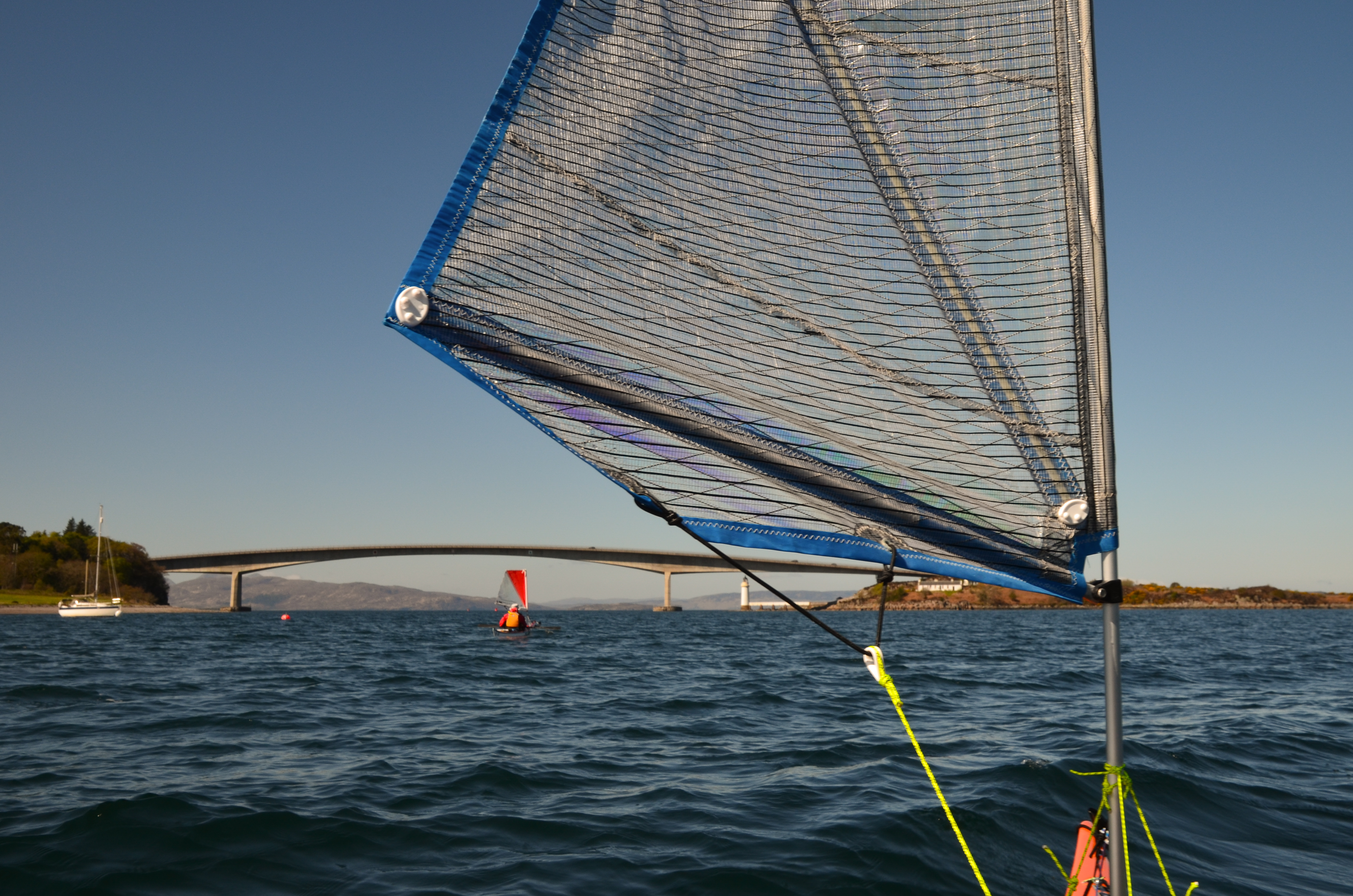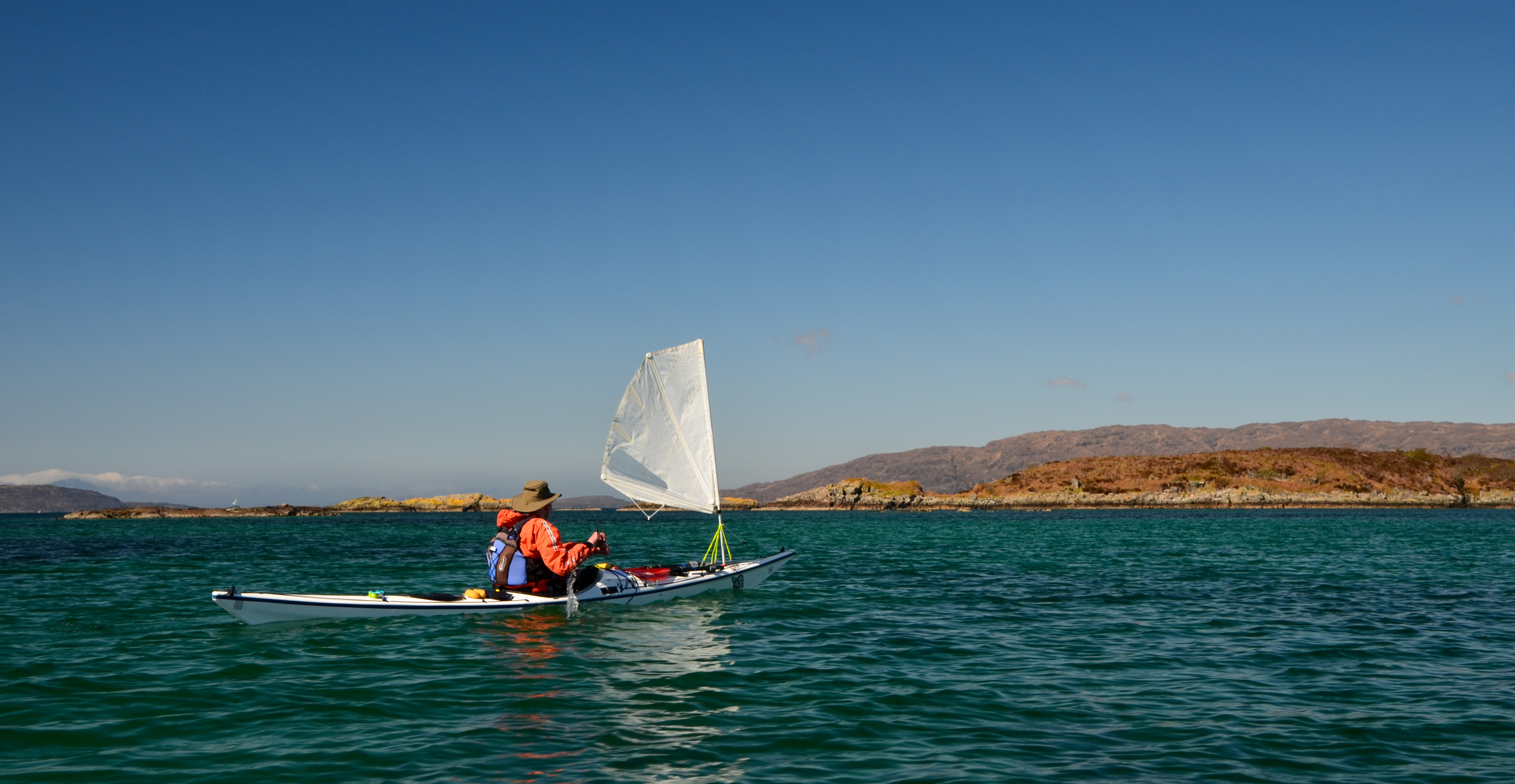
As we left the Black Islands we paddled into the breeze and so dropped our sails. After an energetic couple of kilometres of paddling we came into a lagoon with the most wonderful colour of water as the sun lit the white sand below our boats. Really - could a day get any better than this?!
Tuesday, 31 May 2022
Over the sea from Skye
As we left the Black Islands we paddled into the breeze and so dropped our sails. After an energetic couple of kilometres of paddling we came into a lagoon with the most wonderful colour of water as the sun lit the white sand below our boats. Really - could a day get any better than this?!
Tuesday, 10 November 2020
Autumn on Etive
Of all the seasons, autumn in Scotland is my favourite. the colours are at their best and there's a tangible sense of change in the air - I've never thought it to be a season of decline or dwelled on the shortening day length. Allan, Raymond and I were looking for a sea kayak trip during a period of settled weather in mid-October; we decided on paddling on Loch Etive which we hoped would give us a good trip and allow us to experience the autumn colours from the water too.
Loch Etive is a 30km long, fjiord-like sea loch with its entrance into the Firth of Lorn at Connel, just north of Oban. When the glaciers carved out the loch and then retreated, a sill of rock was left near the entrance. This sill limits the flow of water leaving the loch on an ebb tide, with the effect that the level of the water outside the loch drops faster than that in the loch. From quite early in the ebb a tidal fall forms at Connel where the loch is spanned by a road bridge. On a spring tide, which it was when we did this trip, the Falls of Lora were in full and spectacular flow. We stopped to admire the spectacle, and to watch the river kayakers who use the Fall as a play spot. We, however, had no intention of taking 5 metre fully laden sea kayaks anywhere near this spot on a spring tide and planned to stat our trip some way up the loch!
We gathered at Taynuilt where the loch again narrows but without the excitement of a tidal fall to contend with. We'd need to paddle against the last of the ebb tide for a short while but were confident of finding eddies along the shore to help us past this short section. It was a bright morning but with a chilly breeze which was forecast to drop during the afternoon. Loaded and ready, we got on the water for our short adventure.
Approaching the narrows there are tantalising glimpses of the mountains which line both sides of Loch Etive and give it such character. I've climbed the hills and walked one side of the loch but hadn't previously paddled here, so was looking forward to exploring as much as we could.
We got through the narrows with little difficulty, though against a bit of a breeze as well as the ebb stream. The play of light on the hillsides, alternately lighting the rich autumn colours, was lovely - though we noticed a cloud sheet was beginning to form over the area.
As shafts of sunlight became less frequent their effect seemed more pronounced, pefhaps also due to the lowering angle of the sun at mid afternoon.
All too soon the cloud sheet drew right across the sky, and though the scenery ahead was getting more spectacular the absence of vivid colour took something away. We certainly weren't complaining too much though, this is a great place to explore by sea kayak - and we had an unexpected treat ahead of us.
Thursday, 10 August 2017
A ride down the tide on the Sound of Jura
As we moved out from the Gulf of Corryvreckan into the Sound of Jura the tidal stream was increasing and our GPS confirmed that feeling. Pretty soon we were travelling south at 10 Kph with very little paddling effort.
At the very end of the trip and the end of a lengthy day of paddling, this was a pleasant way to travel! We headed across towards the mainland side of the Sound, taking transits as we went to make sure we passed to the east of Ruadh Sgeir (Red Skerry), a small island in mid channel which splits the tidal stream.
As we approached, the true speed of the flow became apparent and we were slung around the north of the island at a terrific rate........
....into flat calm water - but even here we were getting a great ride down the tide. The view down the Sound to the distant Paps of Jura under a huge cloudscape was very fine.
We passed inside Carsaig Island into a lagoon reflecting the blue of the sky and the vivid green of early summer vegetation.
A familiar yacht was anchored in Carsaig Bay - we'd last met with "Wild Rose" on the west coast of Iona - and she looked just as good in her home bay!
The last few hundred metres into Carsaig seemed to pass quite slowly, we were out of the tidal assistance and we were all tired at the end of a long day.
David and Maurice were heading home the same due to work commitments while Douglas, Sam and I had intended to stay on the water and paddle a little way south to find a wild camp for the night. In the event, we elected to join David and Maurice for dinner at the Tayvallich Inn - which we can heartily recommend - we ordered identical meals - fish and chips all round! From the Inn it was just a few metres to the Tayvallich camp site which we three stayed on for the night.
What a trip it had been! We paddled 135 Km over four days and camped for three nights on some of the wildest and most remote beaches on Scotland's west coast.
A second trip to Jura in two years just reinforced my view that it's amongst the very best of sea kayaking destinations - wild scenery, wildlife, remoteness, grandeur and fast tidal streams make for a potent mix. Colonsay and Oronsay exceeded the very high hopes I had - this was my first visit to both those islands and it most certainly won't be the last.
As ever though, it's the people who really make trips special. To David, Maurice, Sam and Douglas - thank you so much - and Slainte!
Day 1 - Carsaig to Jura, the Jura Portage and West Loch Tarbert
A change of plan sets the wheels in motion across Jura
A Jura salute for a Jura sunset
Day 2 - West Loch Tarbert to Oronsay and the west coast of Colonsay
Snakes alive
Oronsay Priory - a place of peace
Out on the edge - Colonsay's wild west coast
Day 3 - North and east coast of Colonsay and crossing back to Jura
Under a perpetual summer sun
Stocking up at Scalasig
Boules - Hebridean style
The shining sands of Shian
Day 4 - West coast of Jura, Gulf of Corryvreckan and Sound of Jura to Carsaig
The bones of the place
All in the timing at the Gulf of Corryvreckan
A ride down the tide on the Sound of Jura
Tuesday, 18 July 2017
All in the timing at the Gulf of Corryvreckan
As we paddled out from Glengarrisdale towards the north tip of Jura and the Gulf of Corryvreckan, a narrow strip of clear sky broke the uniform grey of the cloud cover; and seemed to point the way to the Corryvreckan.
The island of Scarba gradually emerged as we neared the strait, the sky continued to clear and the temperature soared. Most of us found tiny bays to land in to remove layers of clothing!
The scale of the west coast of Jura is impressive, and certainly this northern section doesn't disappoint - our kayaks were dwarfed by the outcrops of tilted rock layers.
We had timed our arrival at this critical point of our journey to take advantage of the brief period of slack water at the end of the flood, then the start of the east-going ebb. The previous night's full moon was an obvious reminder that we were right on spring tides, and that such slack as there was would be fleeting.
We reached a point where we could see into the narrow strait and it was immediately obvious that the last of the flood was pushing through from the east and encountering a larger body of water on the seaward side. A standing wave was breaking almost from shore to shore on an otherwise flat calm stretch of water marked only by the swirls of tidal offshoots.
Neither Maurice or Sam had been here before, and when Maurice saw the rolling wave, his only comment was "Tell me we're not going through that?!". His apprehension was well-founded, the Corryvreckan is a very active piece of water, and also features one of the world's most violent tidal whirlpools.
We reassured Maurice that the wave would drop away as slack water occurred, and sure enough it slowly split into two sections and dissipated, peeling back to the shore on each side of the strait. I think Sam was actually a little disappointed that we weren't hammering through at peak flow with huge seas......maybe some other time!
The narrowest part of the channel is less than 2km long, but takes a huge volume of water through on each tide. We reckoned that the actual slack water was less than five minutes before we began to feel the insistent pull of the ebb drawing us into the narrows. A few swirls and hydraulic cushions began to appear as the ebb started to establish but in the absence of swell things were very gentle.
Our timing had been good - we drifted through with little drama under a clearing blue sky. Just before we entered the channel Douglas had stopped at a small bay on the Jura shore where he met some Dutch sea kayakers who'd passed through in the opposite direction at the last part of the flood tide. Remarkably, they didn't seem to realise where they'd been paddling.....or the state of the tide.
Emerging from the narrowest part of the Gulf, we felt a small breeze at our backs and hoisted our sails. Just ten or so minutes after slack water, and we were being propelled into the Sound of Jura at 8kph without paddling.....it was what we hoped would be the start of a fast ride down to our finishing point at Carsaig Bay.
Thursday, 1 June 2017
A Jura salute for a Jura sunset
By the time we reached the Cumhann Beag (Little narrows) separating the hidden upper part of West Loch Tarbert from the middle part, the tide was running through like a river. Our plans had been formulated to take advantage of each of the tidal streams we encountered during the journey, or at least planned to avoid paddling against the flow. We'd also taken the wind direction into account in the wider route we envisaged...after all, our sails could help us!
Turning south west into the middle part of the loch, we headed into a searing early evening sun, the angle above the horizon a reminder that we should push on to find a campsite. Although the bothy at Cruib Lodge would have made a fine base for the night, it would have left us a prodigious distance to journey on the following day, so we paddled on past towards the Cumhann Mor (big narrows) separating the central part from the wide outer loch.
Although we were keen to reach our camp site, there was a place to explore which simply couldn't be passed by. The raised beaches near the Cumhann Mor are one of the most remarkable places in Britain, and so remote that most folk wouldn't even know of their existence.
The pebble ridge rises in a series of steps above the present day sea level - relic beaches from a time when the ice pressed down on this part of Scotland and the land was lower.
The top of the ridge is 15 metres above the present high water mark, and the pebbles are left clean and smoothed as if raked....just as they were left when the tide last went out here some 10,000 years ago. Maurice and Sam hadn't been here previously, and the place had left a lasting impression on me from my previous visit....an remarkable landscape simply not to be missed.
After visiting the raised beach we paddled a short way along the south shore of West Loch Tarbert to another raised beach, this one much lower and backed by a level grassy bank - a good camping spot with fresh water nearby. As a bonus, the Paps of Jura heaved into view over the glen behind the beach, and the sky was starting to colour with the imminent sunset.....time to get the tents up and dinner on the go.
When it came, the sunset was a show-stopper. Dipping first beyond the northern headland of Loch Tarbert and then beyond distant Colonsay, the setting sun fired the sky to an intense burnt orange shade. We saluted it with a dram distilled on the very island where we sat - and there was something extra special about enjoying whisky "in its own place" with such a spectacular view in front of us.
The effect of an increase in light levels as the sun began to illuminate the sky from below our visible horizon - it really was a sunset (and a dram) to savour. More subtle than those pyrotechnic sunsets where there's some cloud to catch the light, this was a slow procession of gorgeous shades washing the whole of the western sky.
Well over an hour after sunset, a band of bronze light was still burning on the western horizon, rendering the low outline of Colonsay into sharp relief. It seemed a long way out into the sea, but there lay tomorrow's destination. We sat and chatted long into the evening... just enjoying the sense of place in this remote and wild spot.
Wednesday, 31 May 2017
A change of plan sets the wheels in motion across Jura
As usual we had several trips in mind, it was just a case of which would be best. As the forecasts increased in confidence, we started to plan in some detail for a trip around the Small Isles (Rum, Eigg, Muck and Canna) - the best conditions were forecast for the north of Scotland's west coast. We were delighted that Maurice, David and Sam were able to make the trip too. We planned to set out from Mallaig on Sunday 7th May, returning on Thursday 11th May.
So what on earth were we doing loading kayaks at Carsaig Bay in Argyll on Sunday morning- some 120 km south of Mallaig ?!
Well, 24 hours prior to setting out, the forecast position of the ridge of high pressure had altered subtly. The revised forecasts indicated strengthening winds around the top of the "high" in the northwest, with much lighter winds and sunshine now forecast further south. After a re-evaluation we changed our plan for a trip to the islands of Jura and Colonsay.
This area is well known for remote coasts and very fast tidal streams - I was very grateful that Douglas was able to undertake the revised tidal planning as I was in the middle of a journey home from the south of England when we agreed the new plan. Jura had made a lasting impression on me during a previous trip and I was very keen to visit Colonsay - so despite a busy evening of packing and another long drive to Carsaig on Sunday morning, I simply couldn't wait to get going!
We packed our boats for a five day trip in very warm sunshine under brilliant blue skies - there was hardly a breath of wind. Our flexibility in changing seemed to have worked out- and this was later confirmed when we heard from one friend who experienced very windy conditions in the Small Isles and another who was on a club meet in the far northwest in cold NE'ly winds of F5 which effectively restricted their outings to the sea lochs rather than the open coast.
You'll be able to follow our journey to Jura, Oronsay and Colonsay in "Sea Kayak Stereovision" by reading Douglas' blog, starting here.... :o)
Our trip would involve four significant crossings - the first of which was right at the outset, heading over from Carsaig to the east coast of Jura. Our boats were well laden with supplies and kit, and each of us carried a trolley on the back deck.
A tiny breeze soon died away and we paddled out into the Sound of Jura on a mirror sea reflecting the intense blue of a Spring sky - sea kayaking heaven!
Tidal streams in this part of the Sound reach up to 3.5 knots (7km/h) so any crossing needs to take account of this. As it happened, our crossing would neatly span the turn of the tidal stream, so we were able to aim straight for our destination and allow the tide to move us first one way then the other, pretty much cancelling out the drift.
We reached Tarbert Bay on Jura's east coast at mid afternoon, just after high water. The last time Douglas and I had been in this bay it had collected a deep barrier of rotting weed which had decayed to a stinking slime. We approached with trepidation, but to our relief the beach was clean sand. The place name "Tarbert" is quite common on the west coast of Scotland and indicates a narrow neck of land between tow bodies of water. It derives from Old Norse and means "draw boat" - literally a place where longboats could be pulled overland.
In the hot afternoon sun, our portage promised to be hard work. We helped each other lift the kayaks onto their trolleys and set out.....
...on the track which leads across the island of Jura. Our boats were at the heaviest they'd be for the whole trip - packed with food and water (plus sports recovery drinks) so the climb up to the summit of the portage was taken at a steady pace; our ages ranged from late twenties to mid-seventies, and we were in no particular rush. At the top - 40 metres above sea level - there was a glimpse ahead to West Loch Tarbert.
The descent was a little easier, but the track is everywhere rough and stony - it's a notorious test for sea kayak trolleys. Happily all survived - most of us were using the KCS Expedition trolley which has been proved across this portage before. A shoulder strap definitely helps on these longer portages, whether a bespoke item or improvised with a strap and sling/Karabiner. Having now done this portage both ways - it seems to me that the east-west direction is slightly less strenuous as the ascent isn't as steep. It may only be 1.6Km with 40 metres of ascent - but it's a fair pull!
We got back onto the water at 1715 with three hours until sunset. The ebb tide was now pouring out of the inner part of West Loch Tarbert and a breeze had started up, both of which would assist us. If our plan to circumnavigate Colonsay was to be realised, we needed to put ourselves in the best possible position to cross from Jura the following morning....we still had some distance to go before camp.
Monday, 7 November 2016
Carrying on to the end around Morvern
We woke to a bright morning at our camp on the shore of Loch Sunart, unfortunately so did the midges! A welcome breeze started up as we ate breakfast which was just enough to keep them away.
We were soon on the water and heading into the enclosed Loch na Droma Buidhe (also known as Loch Drumbuie and meaning Loch of the yellow ridge). The mainland shore of this loch had been one possible camp site, but we were pretty sure that the loch would be busy with yachts as it's a popular and very sheltered anchorage. There were six yachts at anchor immediately off the spot we'd identified, and anyway we'd have missed out on the superb sunset as the view from the loch is obscured by the high ground on Oronsay.
The east end of Loch na Droma Buidhe connects with Loch Sunart by a narrow channel which dries out to leave Oronsay connected to the Morvern shore. We knew that we'd have a bit of a portage to move the boats across the gap, but felt that this would be a bit quicker than paddling around the outside of Oronsay against a stiff breeze.
The portage was a bit longer than we'd have liked at around 200 metres but having chosen this route we decided to just carry on and carry the boats over. The yellow colour of the exposed weed here led us to speculate whether this might be the source of the loch's name?
Back on the water and we had a stiff paddle around the south end of Carna against the ebb stream pouring out of Loch Teacuis. The flow here can be very strong but we arrived near the end of the ebb and were able to eddy-hop around the south of Carna then enjoy a push out of Caol Charna (narrows (kyle) of Carna). Although we'd been going less than two hours, a stop for second breakfast was unanimously carried - the exertions of portaging and paddling had rekindled appetites!
Back out on Loch Sunart and we started to feel the east wind in our faces, but it was somewhat less than the F5 being broadcast on the VHF weather forecast. We knew that if it remained at this sort of strength we'd finish our trip without difficulty. Sunart is a long and fjord-like sea loch reaching far from the open sea, lined with glorious Atlantic oakwood for much of its length. The scenery is grand, this part of the loch is dominated by Ben Resipol, which today was pin-sharp in the clear air.
The upper part of Loch Sunart is joined to the rest of the loch by a constriction at Laudale. The tidal stream in the narrows can run very strongly and rough water is often found when wind opposes tide. By the time we gathered in a bay immediately to the west of the narrows the flood tide was barrelling through against a breeze which had risen a notch as it too passed through the gap. We expected some rough water but in truth it was just fun, the boats powering through eddy lines and along ribbons of surf. Donald had so much fun in his F-RIB that he went back for a second pass!
Through the narrows and we were on the last leg of the trip. At our final stop for a leisurely second luncheon the view ahead was to the Ardgour hills, below which we'd set off. It seemed like a long time had passed since setting out on Loch Linnhe, but it was only two days previously; sea kayak trips seem to have this ability to make time seem extended.
By the time we reached the slipway near Strontian the wind had died completely to leave a very warm afternoon with temperatures of 25 degrees Celsius - well, very warm for Scotland that is! After lifting our boats up the slipway, all that remained was to run the shuttle and collect our cars from Glensanda. It had been a really great trip, almost around Morven, shared with good friends and with memories to treasure.
Our route was 95 kilometres, paddled over two and a half days with two nights en route. We started on Loch Linnhe, turned up the Sound of Mull and then along Loch Sunart to finish at Strontian. The forecast weather was for increasingly strong winds from the east, and certainly the wind in the Sound of Mull reached the top of the forecast. Otherwise we enjoyed a light easterly airflow and this is probably the best weather in which to do this trip.
Day 1
Not quite an island, not quite the mainland
How to remove a hill - one load at a time Note that on the Google Earth slide above, the Glensanda quarry is clearly visible as two pale scars above Loch Linnhe, which gives an indication of scale.
Midge Avoidance at Inninmore
Day 2
Having a blast on the Sound of Mull
The magic of a wild camp on Loch Sunart
A Sunart stunner
Day 3
This post